The Comprehensive Guide to Porcelain Slab Cladding: Engineering Interior and Exterior Excellence for Modern Construction
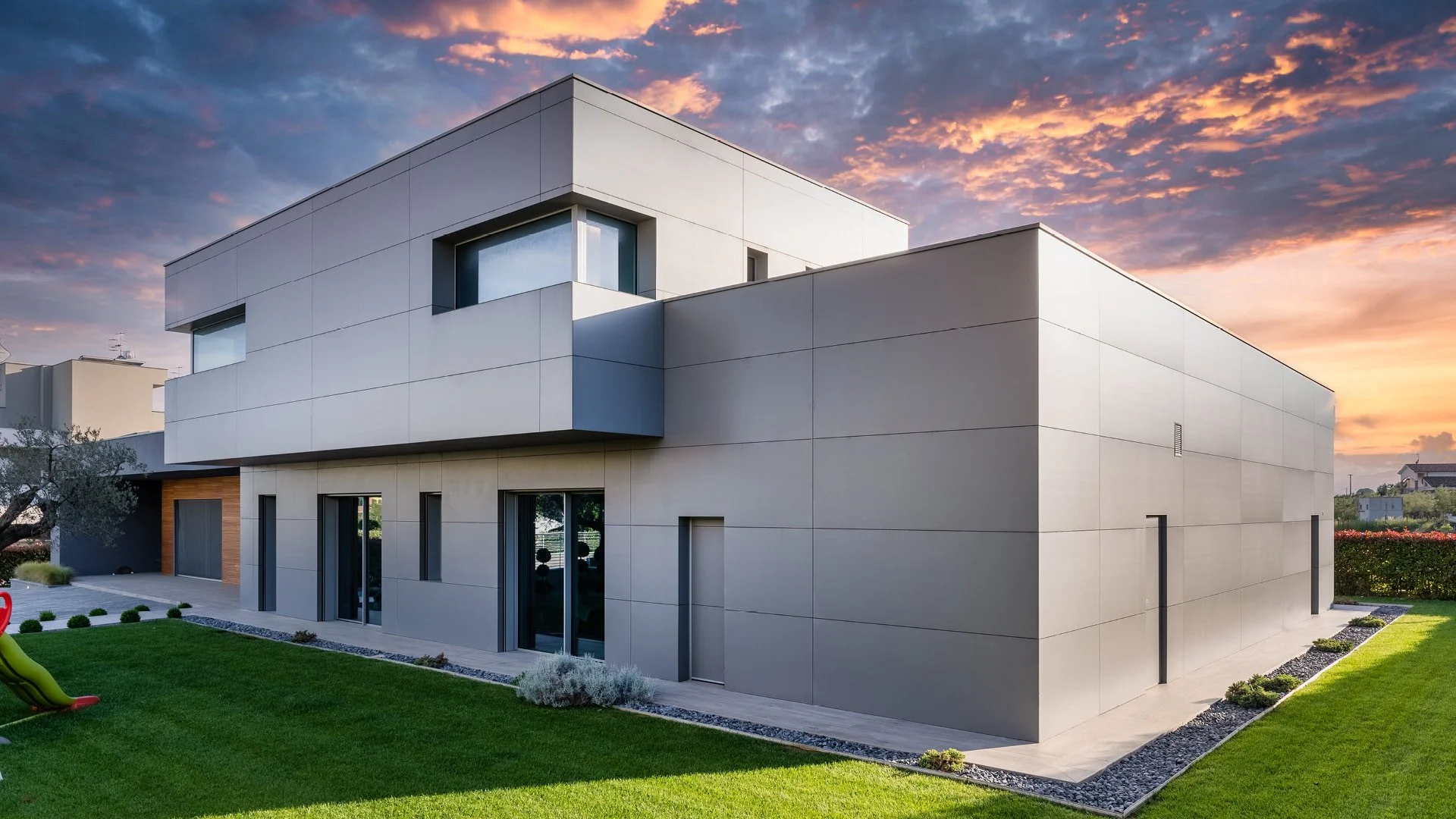
Patrick Villa - Passacqua Group - Teramo, Italy - 2021 - Laminam Italy
1. The Paradigm Shift in Building Envelopes and Interior Surfaces
The global construction landscape is undergoing a significant transformation. Architects, engineers, and developers at firms like CIERO INC are increasingly moving away from traditional masonry and high-maintenance natural stones in favor of a more sophisticated, engineered solution: the large-format porcelain slab. This material represents the intersection of ancient ceramic tradition and 21st-century manufacturing precision.
While porcelain has been used in small formats for centuries, the ability to manufacture massive, "gauged" slabs—often reaching dimensions of 1600mm x 3200mm—has opened new doors for the building envelope. These slabs offer a "skin" that can wrap a building's exterior with the strength of stone but the weight of glass. Simultaneously, they flow seamlessly through interior lobbies, kitchens, and high-traffic corridors. This article serves as a deep-dive technical guide into the engineering behind these systems, the critical differences between interior and exterior applications, and the long-term return on investment for property owners and stakeholders.
2. The Science of Sintered Stone: What Defines a Technical Porcelain Slab?
To specify the right product for a residential or commercial project, it is vital to understand that "porcelain" is not a generic term. In the world of high-end cladding, we are discussing technical porcelain, which is defined by its manufacturing process and chemical composition.
2.1 The Sintering Process and Molecular Density
Technical porcelain slabs are manufactured through a highly controlled process called "sintering." This involves taking raw materials—specifically kaolin clay, quartz sand, and feldspar—and subjecting them to forces that mimic the natural creation of stone over millennia, compressed into a matter of hours. These materials are pressed under extreme pressure, often exceeding 400 bars, which removes all air pockets and moisture from the raw mix.
Once pressed, the slabs are fired in kilns that can be several hundred meters long. The temperatures in these kilns range between 1200 and 1400 degrees Celsius. At these temperatures, the minerals undergo a phase change, essentially melting together into a vitrified, homogenous mass. The result is a material with a water absorption rate of less than 0.1 percent. For a builder, this density is the most important factor because it makes the material frost-proof, stain-proof, and virtually immune to the freeze-thaw cycles that often destroy natural stone or standard ceramic tiles.
2.2 Gauged Thickness and Structural Integrity
One of the most innovative aspects of modern porcelain is the variety of thicknesses available, often referred to as "gauged porcelain." Each thickness serves a specific structural purpose. The 3mm to 6mm slabs are engineered primarily for interior wall cladding and furniture surfacing. Because they are thin, they are lightweight and can even be installed over existing finishes in renovation projects, reducing demolition waste.
In contrast, the 6mm to 9mm range is the industry standard for exterior ventilated facades and high-traffic interior flooring. These slabs provide the necessary flexural strength to withstand wind loads and heavy foot traffic. Finally, the 12mm to 20mm slabs are reserved for high-impact commercial areas and heavy-duty countertops. Understanding these nuances allows CIERO INC to optimize material costs without compromising the structural safety of the build.
3. Engineering the Exterior: The Ventilated Facade System (VFS)
In exterior applications, a porcelain slab is more than just a decorative finish; it is the primary shield for the building's structural core. While direct-bonding (glueing) slabs to an exterior wall is possible in some climates, the gold standard for high-performance buildings is the Ventilated Facade System, also known as a Rainscreen.
3.1 The Physics of the "Chimney Effect"
A Ventilated Facade is a multi-layered dry construction method that creates a physical gap, usually between 30mm and 50mm, between the porcelain cladding and the building's insulation. This air cavity is the "secret sauce" of modern building science. During the summer, solar radiation hits the porcelain panels and heats the air within the cavity. This hot air naturally rises and exits through the top of the facade, pulling cooler air in from the bottom. This is known as the "chimney effect."
By removing heat through convection before it ever touches the building’s structural wall, the VFS significantly reduces the thermal load on the HVAC system. This can lead to energy savings of up to 30 percent in cooling-heavy climates. Furthermore, this constant airflow keeps the insulation and the structural wall dry. If any rainwater manages to penetrate the joints between the slabs, the air movement quickly evaporates the moisture, preventing the growth of mold and the degradation of the building's skeleton.
3.2 Mechanical Attachment and Structural Safety
When mounting massive porcelain slabs on the exterior of a building, safety and wind-load resistance are the top priorities. There are several methods for securing these panels to the aluminum or steel substructure.
Visible mechanical clips are the most common and cost-effective method. Stainless steel clips grip the edges of the porcelain slab, securing it to the vertical rails. For many commercial projects, these clips are powder-coated to match the color of the slab, making them nearly invisible from a distance. The primary advantage of this system is that it allows for individual panels to be removed and replaced if they are ever damaged by extreme impact.
For luxury residential or high-profile commercial projects where a seamless look is required, hidden undercut anchors are used. This involves drilling specialized "undercut" holes into the back of a thicker porcelain slab (usually 12mm). A mechanical bolt is then expanded into the hole, which is then attached to the rail system. This creates a completely clean facade with no visible hardware, mimicking the look of solid stone blocks.
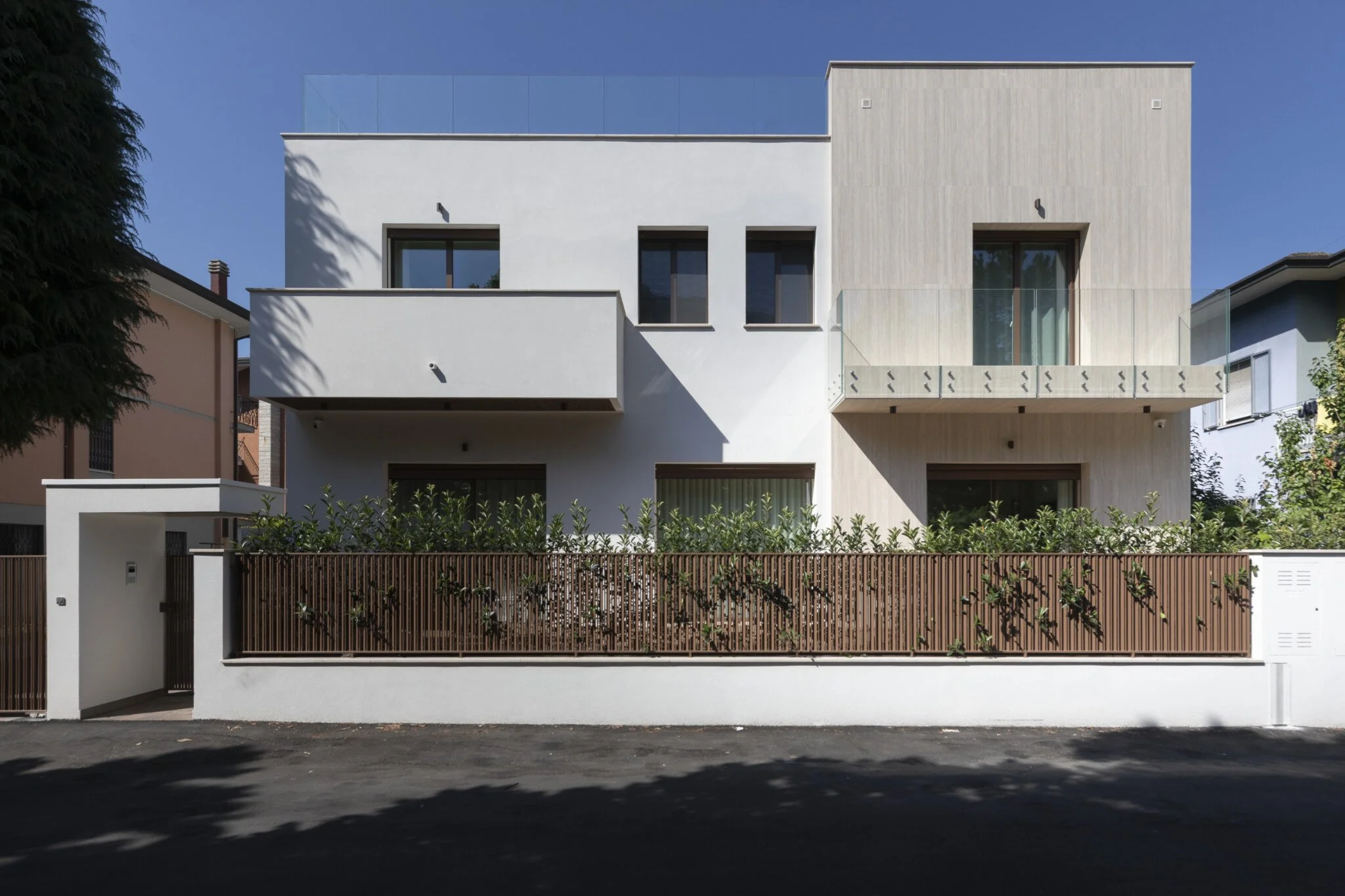
Private Villa - Giacomo Natali - Rimini, Italy - 2025 - Laminam Italy
4. Interior Cladding: Beyond Aesthetics to Performance
While exterior engineering focuses on weather and wind, interior cladding with porcelain slabs focuses on aesthetics, hygiene, and the elimination of maintenance. In large-scale residential and commercial interiors, the goal is often to create a sense of "monumentality"—a space that feels solid, permanent, and seamless.
4.1 The Death of the Grout Line
The greatest aesthetic advantage of using porcelain slabs for interiors is the near-total elimination of grout lines. In a traditional tile installation, the grid of grout lines can make a space feel "busy" and cluttered. By using slabs that are 2700mm high, a builder can often cover an entire wall from floor to ceiling with a single piece of material.
This creates a monolithic appearance that was previously only possible with expensive, heavy marble slabs. Fewer joints not only look better but also trick the human eye into perceiving a small lobby or bathroom as being much larger and more expansive than it actually is. Furthermore, advanced digital printing technology allows for "bookmatching." This is where the veins of two adjacent slabs are mirrored, creating a dramatic, high-end focal point that is highly sought after in luxury real estate.
4.2 Hygiene in High-Traffic Commercial Zones
In a post-pandemic world, the "cleanability" of a surface has become a primary engineering requirement for commercial spaces like restaurants, hotels, and medical facilities. Porcelain is a biologically inert material. Because it is non-porous and has a water absorption rate near zero, it does not provide a porous "nest" for bacteria, mold, or viruses to inhabit.
Unlike natural stones like marble or limestone, which are chemically sensitive and can be "etched" or ruined by the acidic chemicals found in industrial cleaners, porcelain is incredibly resilient. It can be sanitized with bleach, alcohol, or other strong disinfectants without losing its color or structural integrity. For property managers, this means the interior will look brand new for decades, whereas softer materials would require expensive polishing and resealing every few years.
5. The Technical Demands of Installation: Precision and Handling
Because porcelain slabs are so dense and thin, they require a different set of skills than traditional masonry or tiling. For a CIERO INC project, the success of the installation depends on specialized tools and a "zero-tolerance" approach to mistakes.
5.1 Substrate Preparation and Flatness
In a direct-bond interior application, the slab is only as strong as the wall behind it. If a wall has a "bow" or a "hump," the thin porcelain slab will be forced to bend to match that curve. Because porcelain is rigid, this creates internal tension that can lead to a crack over time. The industry standard for slab installation is that the substrate must be flat within 3mm over a 3-meter span. If the wall does not meet this standard, it must be leveled with a high-performance patching compound before the slab ever touches the surface.
5.2 The Art of Cutting and Fabricating
Cutting a 3200mm slab requires specialized equipment. Standard "snap-and-score" cutters used for small tiles are insufficient. Professionals use rail-mounted saws with water-cooled diamond blades. It is also critical to manage the "internal tension" of the slab. When a large piece of porcelain is cut, it can sometimes "walk" or snap if the tension is not relieved correctly. For complex cuts—such as mitering a 45-degree corner for a seamless edge—factory-controlled water-jet cutting is highly recommended over on-site manual cutting.
5.3 Adhesive Coverage and the "Full Contact" Rule
One of the most common causes of failure in interior porcelain slab flooring is the presence of air pockets (voids) in the mortar. If a 6mm slab is installed over a floor and there is an air pocket underneath it, any heavy impact—such as a dropped heavy object or the leg of a grand piano—will cause the slab to shatter at that point. To prevent this, installers use the "double-buttering" method: applying mortar to both the floor and the back of the slab using specialized notched trowels. This ensures 100 percent coverage and a solid, structural bond that can withstand heavy commercial loads.
6. Sustainability and the Environmental Impact of Porcelain
In the modern building era, sustainability is not just a buzzword; it is a regulatory requirement. Porcelain slabs contribute significantly to green building certifications such as LEED and WELL.
6.1 Longevity and Life Cycle Assessment
The most sustainable building material is the one that never needs to be replaced. Wood floors may rot, vinyl may off-gas and degrade, and carpets must be replaced every decade. Porcelain, however, is a 50-plus year material. Its inorganic composition means it does not fade under UV light, and its hardness means it does not wear down. When looking at a 50-year Life Cycle Assessment (LCA), porcelain often has a lower carbon footprint than "cheaper" materials that must be manufactured and shipped three or four times over that same period.
6.2 Thermal Efficiency and Radiant Heating
Porcelain has excellent thermal conductivity, making it the ideal partner for radiant floor heating systems. In the winter, the slabs absorb the heat from the water pipes or electric coils beneath them and radiate it evenly throughout the room. Because of its thermal mass, it stays warm long after the heating system has cycled off. In the summer, the same thermal mass helps keep the interior cool by absorbing ambient heat, reducing the "swing" in indoor temperatures and lowering energy consumption.
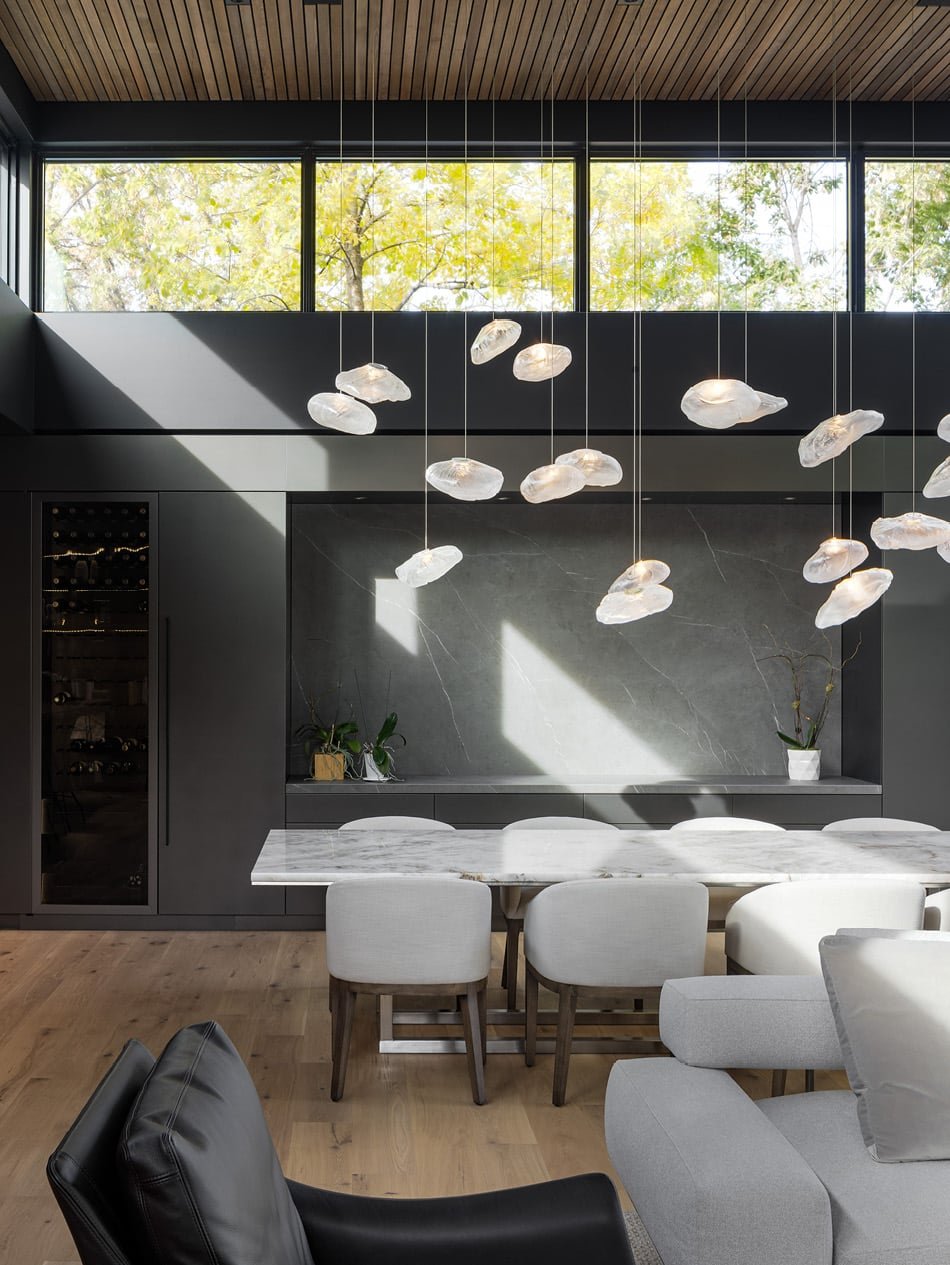
Living Lounge - Secter Architecture + Design - Manitoba, Canada - 2021 - Laminam Canada
7. Commercial Value: ROI and Perceived Luxury
For developers and builders, the decision to use porcelain slabs often comes down to the bottom line. While the initial cost of the material and the specialized labor is higher than traditional finishes, the return on investment is multi-faceted.
In residential real estate, a kitchen or bathroom finished with large-format slabs is a "prestige" feature. It signals to a potential buyer that the home is built to a higher standard, allowing for a higher asking price. In commercial real estate, the value lies in the reduction of Operating Expenses (OpEx). Because porcelain is graffiti-resistant and doesn't require periodic resealing or painting, the maintenance budget for the building is significantly lower. Over a 20-year period, a porcelain facade can save a property owner hundreds of thousands of dollars in maintenance and energy costs compared to an EIFS (Exterior Insulation and Finish System) or wood-clad building.
8. Conclusion: Why CIERO INC Should Lead with Porcelain
The engineering of a porcelain slab system—whether it is a ventilated exterior facade or a monolithic interior wall—requires a high level of technical expertise. However, the benefits are undeniable. By separating the "weather shield" from the "thermal shield" on the exterior, and by providing a hygienic, seamless, and durable surface on the interior, we create buildings that are prepared for the challenges of the future.
As building codes continue to tighten regarding fire safety (porcelain is a non-combustible, Class A1 material) and energy efficiency, the demand for these systems will only grow. For the modern builder, porcelain slabs offer the rare opportunity to provide a client with a building that looks like a work of art but performs with the precision of high-end aerospace engineering. Success in this field requires a commitment to quality materials and a deep understanding of the mechanical systems that support them.